


Fine Art Printing Services That Get It Right
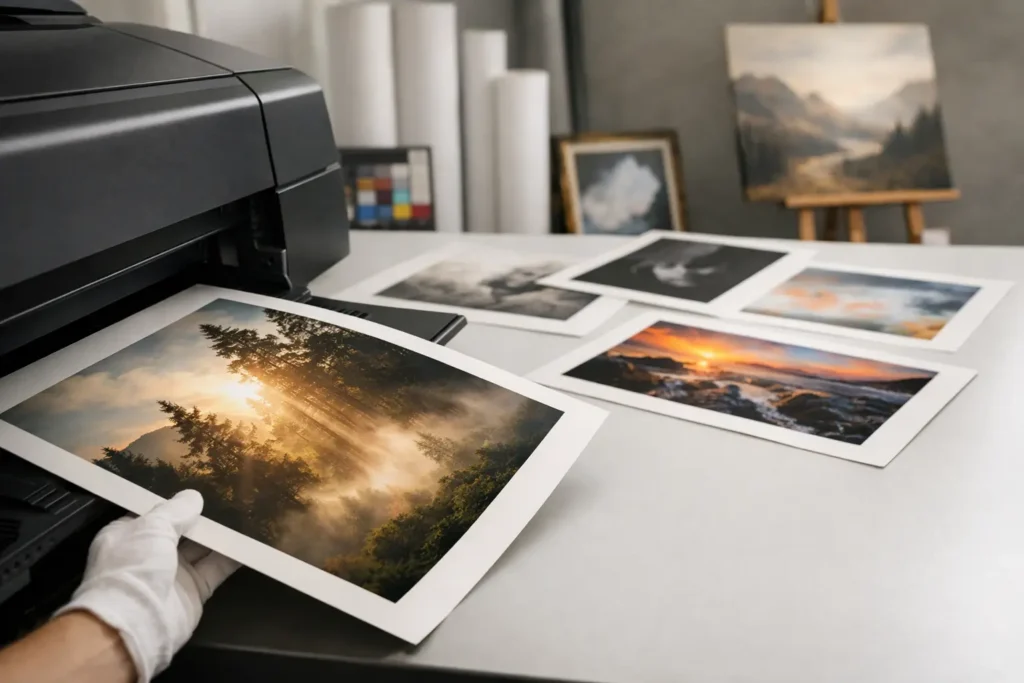
When a print is meant to be sold, framed, exhibited, or gifted, close enough is not good enough. Fine art printing services need to do more than put ink on paper. They need to preserve detail, hold subtle color shifts, respect the texture of the original, and give you confidence that what leaves the shop reflects your work the way it should.
That matters whether you are an artist preparing for a gallery show, a photographer building a print collection, or a business creating high-end decorative pieces for an office, hotel, or retail space. The right print partner helps you avoid the expensive mistakes that happen when artwork is treated like a standard poster job.
What fine art printing services should actually deliver
At the most basic level, fine art printing is about faithful reproduction. But in practice, that means a lot of moving parts have to work together. Resolution has to be strong enough to keep edges clean and textures visible. Color has to be managed carefully so skin tones, shadows, gradients, and saturated areas reproduce with control instead of shifting flat or muddy. Paper choice has to support the look and purpose of the piece rather than compete with it.
A good provider also understands that art buyers and artists notice different things than general print customers. They pay attention to shadow detail, black density, highlight retention, paper warmth, and how the print feels in hand. If the image is excellent but the substrate feels cheap, the overall impression drops fast.
That is why fine art printing services are rarely just about machinery. Equipment matters, but so does the judgment behind it. Knowing when to suggest a matte paper over a glossy stock, or when a slight adjustment will improve print depth without changing the character of the original, is part of the value.
Why paper choice changes the result
If you have ever seen the same image printed on two different papers, you already know how dramatic the difference can be. Bright white smooth stock can make color feel crisp and modern. A textured fine art paper can add softness and depth. A heavier paper can give the print more presence, while a lighter sheet may work better for inserts, portfolios, or short-run proofs.
There is no single best paper for every project. It depends on the artwork and on what happens after printing. A retail-ready print sold loose in a sleeve may call for one approach. A framed piece for an interior designer may call for another. Reproductions of watercolor, charcoal, or mixed-media work often benefit from papers that complement the character of the original rather than trying to make it look overly slick.
This is where local, hands-on support makes a real difference. Looking at options in person is easier than trying to choose from a screen and a product name alone. For many customers, that step saves both time and reprints.
Color accuracy is not automatic
One of the biggest misconceptions about art printing is that a high-quality file will automatically produce a high-quality print. Sometimes it does. Often, it does not.
Screens display light, while prints reflect it. That alone changes how color is perceived. Add differences in monitor calibration, file setup, paper type, and printer settings, and you can see why color management matters so much. Rich blues may print darker than expected. Warm neutrals can drift. Deep shadows can lose separation if the file is not prepared correctly.
Reliable fine art printing services account for those variables instead of treating every file the same. They look at the intended output, not just the uploaded artwork. In many cases, a proof or test print is worth the extra step, especially for limited editions, client presentations, or high-value pieces. It is a trade-off between speed and certainty, and for important work, certainty usually wins.
Who benefits from fine art printing services
Artists and photographers are the obvious fit, but they are not the only ones using this kind of printing. Interior designers often need refined artwork reproductions for commercial spaces. Local businesses use art prints for branded environments, office décor, and hospitality settings. Event marketers may need premium visual pieces for installations, donor displays, or presentation environments where standard poster stock would feel underwhelming.
Creative professionals also use fine art printing for portfolios, mockups, and client samples. When presentation quality affects perception, the print itself becomes part of the pitch. A strong print can make your work feel finished, considered, and ready for the market.
What to ask before placing an order
If you are comparing providers, it helps to ask practical questions early. Can you review paper options before production? Is there support for file setup if needed? Are short runs available, or only larger quantities? How are color expectations handled? Can you request a proof? What is the turnaround time if you are working toward a show, launch, or event deadline?
Those questions are not just about service. They help reveal whether the printer treats your project as a custom job or as a generic upload-and-print order. For fine art work, that distinction matters.
Pricing matters too, of course. Budget-conscious ordering is smart, but the cheapest route can become expensive if you end up reprinting because of paper mismatch, color issues, or disappointing finish quality. A better approach is to weigh cost against purpose. A lower-cost option may be perfectly acceptable for internal review or sample sets. A sale-ready or display-ready print usually deserves more care.
Local support makes the process easier
There is a reason many artists, businesses, and organizations still prefer working with a local print team. Fine art printing often involves decisions that are easier to make in conversation than through a checkout page. You may want help choosing between two papers. You may need a fast turnaround without sacrificing quality. You may need design support for labels, packaging, signage, or promotional pieces that go with the print release.
That broader support is especially useful when artwork is part of a bigger campaign. A local partner can help you move from prints to postcards, event signage, branded packaging, or presentation materials without sending you to multiple vendors. For customers managing deadlines, budgets, and brand consistency, that convenience is not a small benefit. It keeps the process organized and reduces room for miscommunication.
In a market like San Diego, where artists, small businesses, events, and hospitality brands often need quick, polished production, responsive local service can make the difference between scrambling and staying on schedule. That is one reason companies like Ego id Media continue to earn trust by combining print quality with real person-to-person support.
When fast turnaround matters – and when it should not
Speed is important, especially for event deadlines, pop-up shows, client installs, and last-minute replacements. But with fine art printing, rush service has limits. If your project depends on precise color matching, specialty paper, or proofing, building in a little more time usually leads to a better result.
That does not mean every order needs a long lead time. Experienced print teams know how to balance urgency with quality control. The key is being clear about priorities. If the deadline is fixed, your printer can guide you toward the best available options within that window. If quality is the top priority, they may recommend a slightly slower path with more review upfront.
Fine art printing services are part of your presentation
A print is not just a reproduction. It is often the version people live with. It is what hangs on the wall, sits in the portfolio, enters the sale, or represents your brand in a space. That is why the print process deserves the same care as the artwork, photography, or design itself.
The best fine art printing services bring together technical quality, material knowledge, and responsive support. They help you choose well, print confidently, and avoid preventable mistakes. And when you are balancing deadlines, presentation standards, and budget, having a knowledgeable local team in your corner simply makes the job easier.
If your work deserves more than a standard print order, trust the process to people who understand the difference. The right print should look right, feel right, and be ready to represent you the moment it leaves the press.
Leave a reply

Leave a reply